
Leaving Mint
The budgeting app where you're the customer
Mint was free because your financial life was the product being sold. When Intuit closed it in March 2024, millions of people found out what that arrangement was really worth. Tavera Money is paid for by the people using it — which is why we can promise never to sell your data and mean it.
What's different
Four things that follow from not selling ads
Paid for by users, not advertisers
Mint was free because it made money recommending credit cards and loans, and because your financial data was the asset. Tavera Money charges a subscription and sells nothing about you. That single difference decides most of the others.
Still free if you want it to be
Basic is free forever and does all the budgeting — accounts, transactions, budgets, goals, debts, bills and the month-end recap. What you pay for is bank syncing, because that is the part with a real per-customer cost.
It tells you what to do, not just what happened
Mint was good at showing you a pie chart of a month you could no longer change. Tavera Money shows spending pace while the month is still running, and closes it with ranked overspends and a specific next step.
You can leave whenever you like
Mint users found out the hard way what it means when an app shuts down. Export every transaction and your full balance history as CSV, on any plan, without asking anyone.
Bringing your history
Import the CSV you exported, and pick up where you left off
Map your columns, see every row validated before anything is written, and let duplicate detection catch the overlap. Once your history is in, Tavera Money can generate a starting budget from your own past spending rather than asking you to invent numbers.
- Column mapping with a preview and per-row validation
- Duplicate detection so a re-import does not double your history
- Generate a budget from your imported spending in one step
CSV import
The CSV import screen showing column mapping and a validated preview of rows before import.
Categorising
Categories that learn from you instead of fighting you
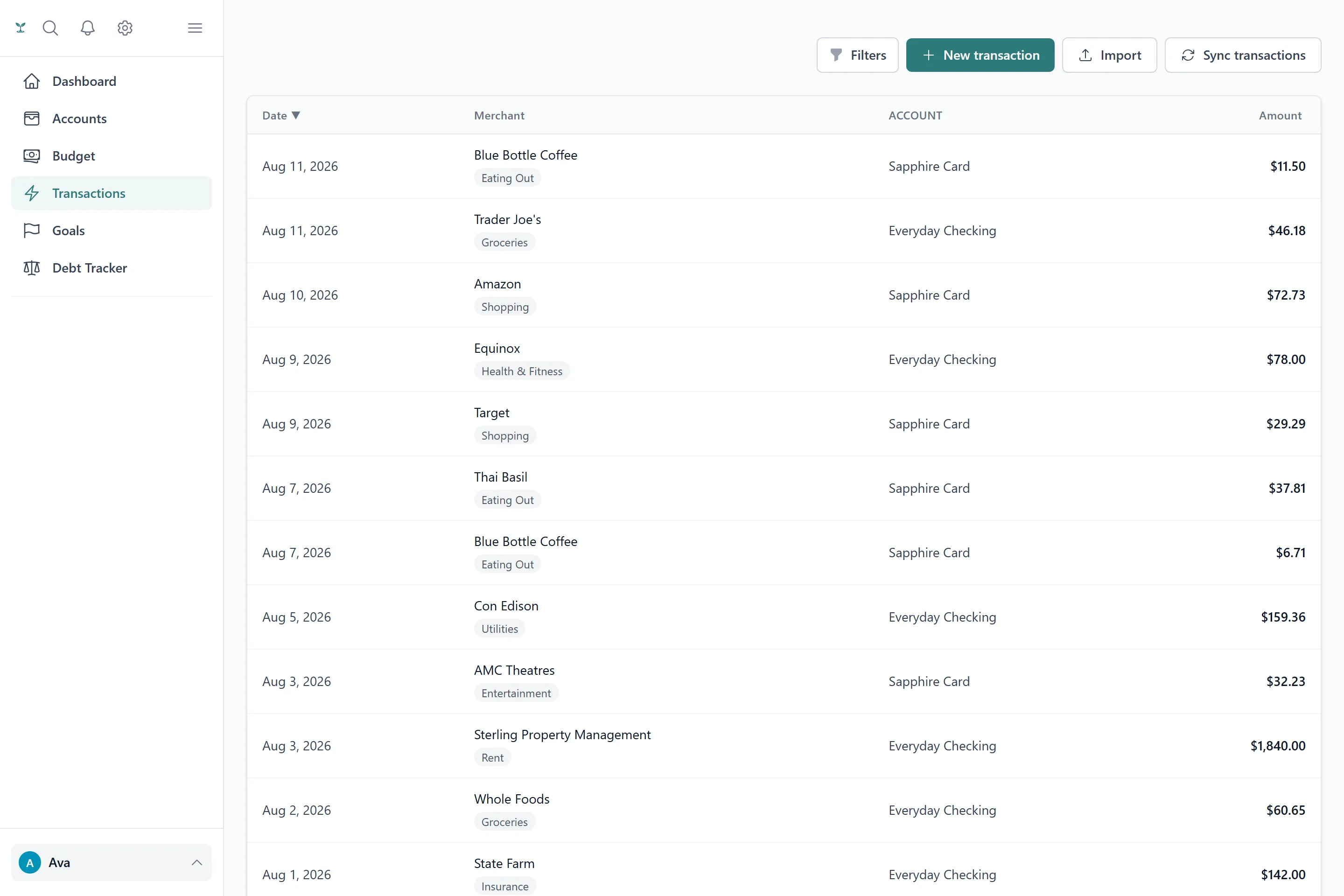
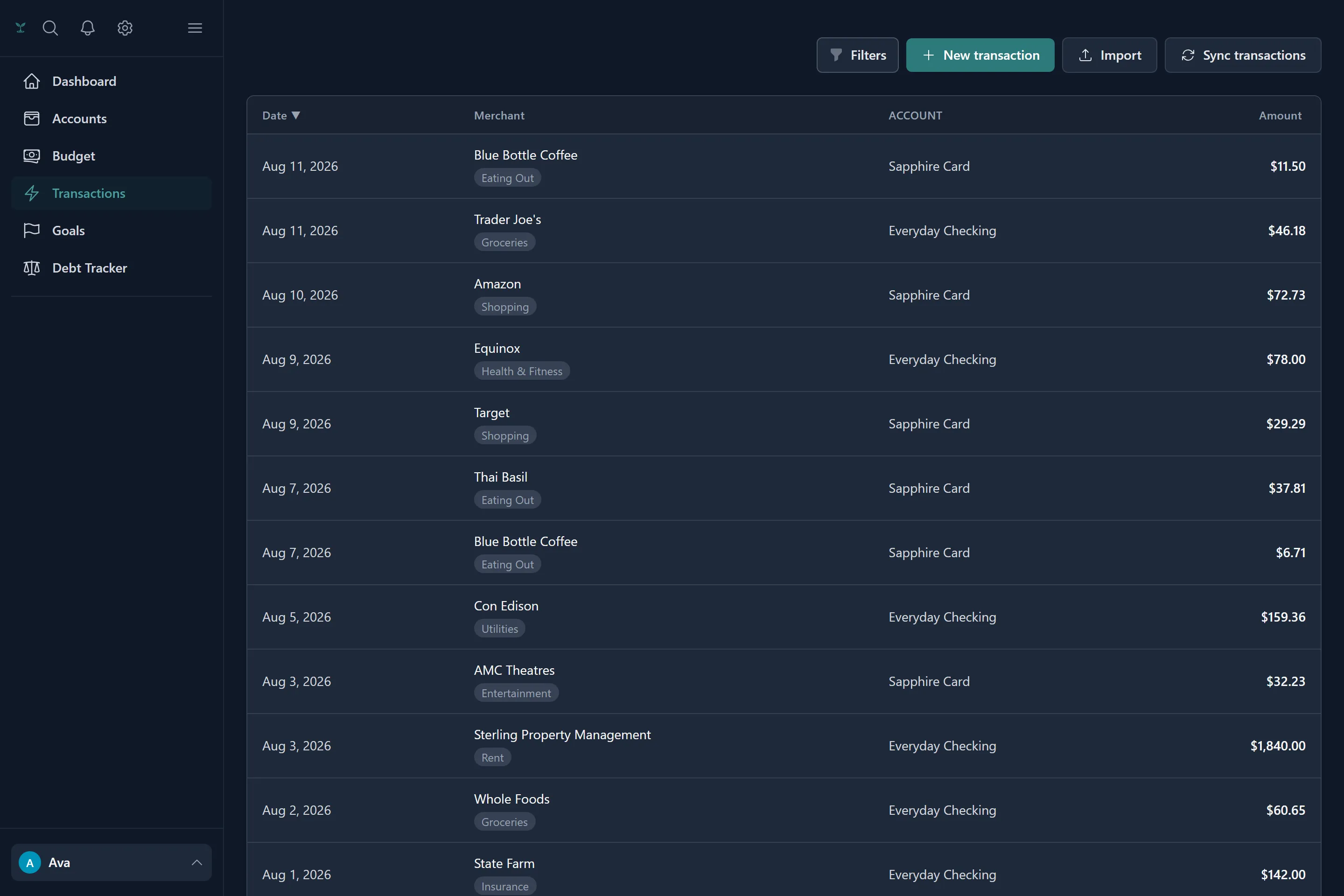
The most tiring part of Mint was re-categorising the same merchant forever. Tavera Money assigns a category from your rule, then from the category you last chose by hand for that merchant, then from your saved mapping of the bank's own labels — and every transaction is badged so you know which one it used.
- Correct one transaction and it offers to make a rule, saying how many past transactions it would fix
- Apply a new rule retroactively to everything already in your history
- Transfers between your own accounts are paired and kept out of spending
What you won't find here that Mint had
No credit score tracking, no card or loan recommendations, and no mobile apps — Tavera Money is a web app that works on a phone browser. The first two are deliberate: they were Mint's business model, not features for you. The third is simply not built yet, and we would rather say so than let you find out later.
Questions
Moving over
What actually happened to Mint?
Intuit announced in late 2023 that it was shutting Mint down, and closed it in March 2024, directing users to Credit Karma — a different product with a different purpose. Budgets, categories and much of the history people had built over years did not come across intact.
Can I import my Mint data?
If you exported your Mint transactions as CSV before it closed, yes — Tavera Money imports CSV with column mapping, per-row validation and duplicate detection. Once your history is in, you can generate a starting budget from it rather than typing category amounts from scratch.
Is Tavera Money free like Mint was?
There is a genuinely free plan, but it is free in a different way. Mint was free because advertising and lead generation paid for it. Tavera Money Basic is free because it costs us almost nothing to run — the paid plans, which add bank syncing, subsidise it. Nobody is buying access to you.
Does Tavera Money show credit scores or offers?
No. There are no credit scores, no card recommendations, no loan offers and no sponsored anything. Those were how Mint made money, and building them would put us back in the business of selling your attention.
Should I be looking at Monarch instead?
Quite possibly — it is where most Mint users ended up, and it deserves a straight answer rather than a swerve. Monarch charges a subscription, runs no ads and does not sell financial data either, so nothing on this page is an argument against Monarch. It also has mobile apps and investment tracking, which we do not. We have written that comparison out in full, including the places Monarch is ahead of us.
How many banks can I connect?
None on the free plan, up to five on Plus at $11.99 a month, and unlimited on Premium at $14.99 a month. One connection is one bank, however many accounts sit behind it. You can also skip bank linking entirely and import a CSV from your bank each month.
Weighing us against where most Mint users went? Read the honest comparison with Monarch Money — including the places Monarch is ahead of us.
Budget somewhere that isn't selling you.
Start free, import your history, and see your first month close properly. No card, no trial clock, and an export button if you ever want out.
No card required · Your data is never sold · Export it any time